
Centre might move swiftly on its next round of strategic sales in CPSEs
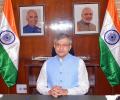
From trusted bureaucrat, to Wharton, MNC executive to businessman, and now politician, the man in charge of two weighty ministries is a unique all-rounder with specialist knowledge.
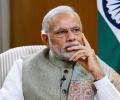
Like Nehru, Modi is loathe to touch the public sector. His policy towards Israel leans towards 'non-alignment'. You can find other similarities: frequent public speeches, personalised leadership, total control over foreign and strategic policies, even stylised dressing, says Shekhar Gupta.
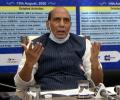
'The much-awaited decision could be a welcome change at a time when the Indian armed forces are crying for self-reliance and the defence industry is looking forward to more indigenisation,' notes Nitin A Gokhale.

Suuti's merchant bankers give proposal; deal value could be Rs 2,800 crore
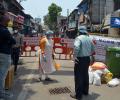
'... so that the hospitals do not get overwhelmed. We have to avoid it at all costs.'

Not only do you need an effective and independent regulator, you also need competition to flourish.

'Byju's financials only reflect the core business. At a group level, they are experiencing substantial losses.'

Hackers believed to be working for the Chinese military breached the United States government computers, possibly compromising the personal data of 4 million current and former federal employees.

The Centre has advised banks to make a 20 per cent reduction in expenditure related to non-core business activities, along with deferring "avoidable expenditure" on "purchase of staff cars", "refurbishment of guest houses" and on the interior decoration of administrative and back offices.

'I would say restore the banks to health, get active board composed of professionals, then there will be an ideal situation for merger.'

At present, in Myanmar, GAIL and IndianOil have a minority stake in a gas pipeline which goes to China, through South East Asia Gas Pipeline Company.
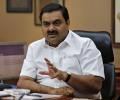
Well-known US activist investor Hindenburg Research has alleged that Adani Group was "engaged in a brazen stock manipulation and accounting fraud", a charge the conglomerate described as malicious, unsubstantiated, one-sided, and having done with malafide intention to ruin its share-sale. Hindenburg, a US-based investment research firm that specialises in activist short-selling, said its two-year investigation reveals that "the Rs 17.8 trillion ($218 billion) Indian conglomerate Adani Group has engaged in a brazen stock manipulation and accounting fraud scheme over the course of decades." The report comes ahead of a Rs 20,000 crore follow-on share sale of Adani Group's flagship Adani Enterprises.

'My wife, family members as well as members of the workers will be trustees.' 'The trust will take all decisions -- no family member can individually take any decision.'

If you are buying a bond to cater to your regular income needs, check the interest distribution schedule.

Fix India's real estate sector. Fix India's public sector banks, advises Tamal Bandyopadhyay.

'It is strange a government that is bold and coercive has meekly chosen to do more of what has repeatedly failed to work in the past.' 'And sadly, rating agencies, the business community, fund managers, and analysts, who know this, have chosen to act as compulsive cheerleaders,' says Debashis Basu.

Sharad Pawar reckons that the NCP has value as a united, going concern, not as a gaggle of leaders in search of followers, notes Shreekant Sambrani.

Even if some of those projects remain on paper, the potential for manufacturers and engineering firms is too big to ignore

Rebalance your portfolio in case it has become overweight on equities vis-a-vis your strategic asset allocation.

These sectors have underperformed the wider market over the past year and are seen having far more upside potential if the economy picks up thanks to Modi's reformist agenda.

Friendlier government policies, greater demand and better supply of coal have fuelled investor interest.

For next fiscal, the minority stake sale target has been kept at Rs 36,000 crore.
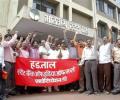
During the negotiations held on May 5, IBA made two unacceptable propositions including an offer of 2 per cent hike in the wage bill cost as on March 31, 2017
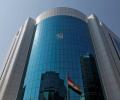
PSBs were required to bring down government shareholding to at least 75 per cent, to comply with the amended Securities Contract (Regulations) Rules by August 2017.

Air India has been in the red since the merger of then Air India and Indian Airlines in 2007.

Govt is keen to push reforms in the insurance sector.
.jpg)
Though the party's pre-poll promises include increasing the focus on technology, this isn't a new idea.
.jpg)
The market regulator is wielding an unprecedented level of control over how mutual funds operate, delaying new launches and dictating investment strategy, frustrated insiders in the embattled industry say.

Richest Indian Gautam Adani's ports-to-power-to-cement conglomerate is "deeply overleveraged" with the group predominantly using debt to invest aggressively across existing as well as new businesses, CreditSights, a Fitch Group unit, said on Tuesday. In a report titled 'Adani Group: Deeply Overleveraged', CreditSights said, "In the worst-case scenario, overly ambitious debt-funded growth plans could eventually spiral into a massive debt trap, and possibly culminate into a distressed situation or default of one or more group companies." Starting out as a commodities trader in the late 1980s, the Adani group has diversified from mines, ports and power plants into airports, data centers and defence.

'It is a national shame that the only country that enacted a food security act is now better known as the land of farmer suicides. Indian farming can change only if national irrigation policy is implemented in totality,' Dr M S Swaminathan tells Shobha Warrier/Rediff.com

Congress leader Rahul Gandhi on Friday assured that the Citizenship Amendment Act (CAA) will not be implemented in Assam if the party is voted to power in the state in the coming assembly poll.

Banks are also weighing the option of hiring experts for help in specialised areas.

This was the one Budget that required radical departures on all these fronts, when it had none, asserts, Shreekant Sambrani.

The proposal for listing public general insurers had come up in 2007.

The government is somehow convinced that selective low-rate lending will stimulate demand and accelerate economic growth that plunged to a four-year low of 4.4 per cent in the first three months of 2013-14.

Bank CFOs may meet next week to discuss minimum public shareholding and takeover rule issues.

Mandaviya said this is the second phase of the Emergency Response and Health System Preparedness Package as the Central government had given Rs 15,000 crore earlier for setting up Covid-dedicated hospitals and health centres across the country.
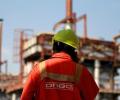
At a time when crude oil and natural gas prices are sky-high, public sector behemoth ONGC's haphazard planning and mismanagement in developing showpiece deep-sea KG-D5 block is costing the nation over Rs 18,000 crores due to the delayed output of oil and gas, government officials said. ONGC was originally to start gas production from the Cluster-II fields in block KG-DWN-98/2 (KG-D5) in June 2019 and the first oil was to flow in March 2020. But these targets were quietly shifted to end-2021 because of deferments in awarding the fragmented work packages of the project, two officials with direct knowledge of the matter said on condition of anonymity.

'If the government was serious about co-opting the corporate sector meaningfully in the fight against COVID-19, it could have specified activities beyond cheque-writing,' notes Kanika Datta.
 © 2026 Rediff.com - Advertise with us - Disclaimer - Privacy Policy - Sitemap - Feedback - About us - Terms of use - Grievances